 ameya labs

Two ways to begin
In breath-awareness meditation, you notice breathing as it happens. There is no count to hit. You might pay attention to the movement of your chest or the feeling of air at your nose. When you notice that you are thinking about something else, return to that sensation.
In paced breathing, a count or visual cue suggests when to breathe in and out. Some people appreciate having something concrete to follow. Others find it easier to leave their breathing alone. You can try both without deciding that one must be your permanent method.
Try a breathing pause in the app
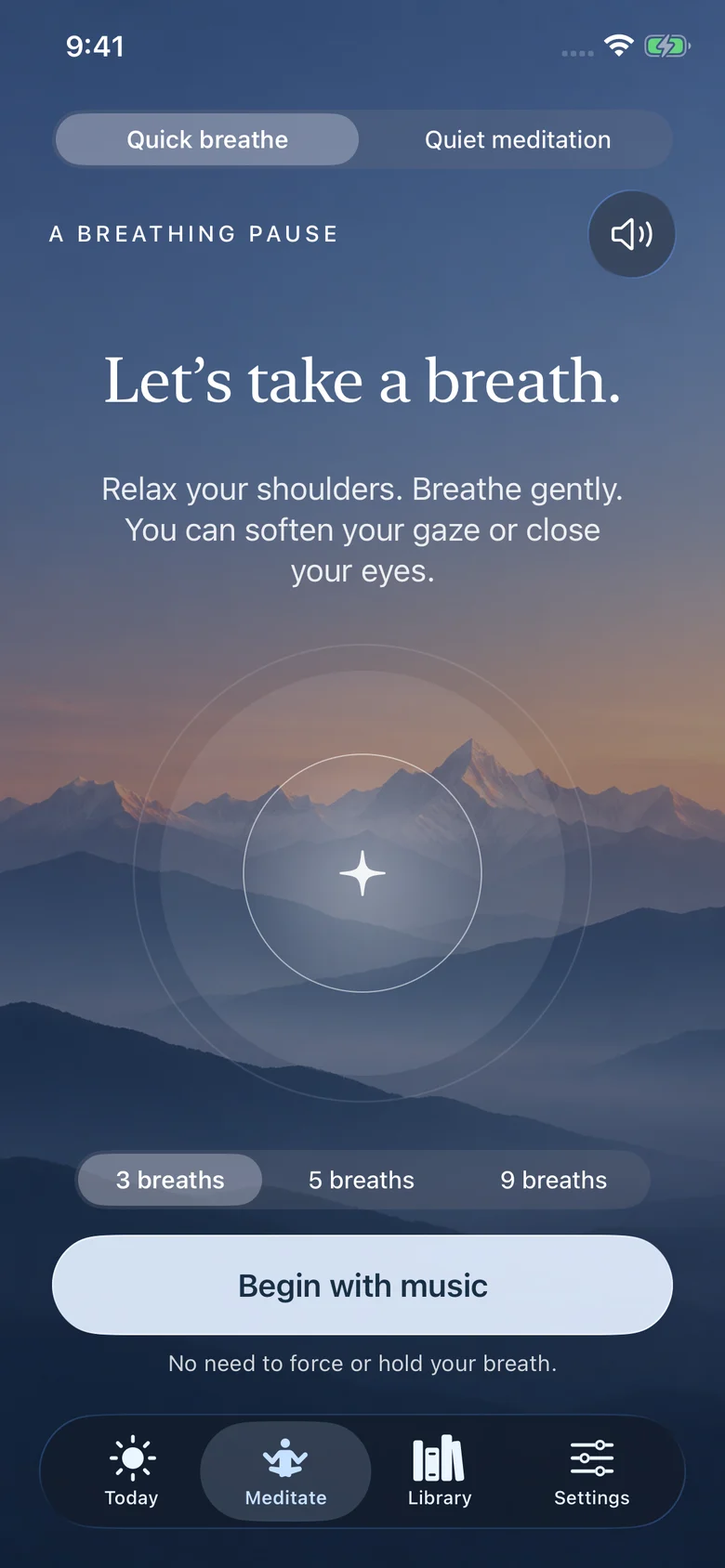
Open Bhagavad Gita English & Hindi, choose Meditate, then Quick breathe. Choose three, five or nine breaths. The circle expands and contracts to guide the movement, with optional calming music.
The app uses a roughly 4.5-second inhale and 6-second exhale, with no holding phase. Treat the animation as an invitation, not a test. Breathe comfortably rather than taking unusually large breaths to keep up. If the pace does not suit you, use Quiet meditation and follow your natural breath instead.
Let the next breath be ordinary
You may finish and feel quieter. You may still have the same busy thoughts. Neither result needs a verdict. The useful practice is noticing where your attention went and choosing to return, without turning that moment into another criticism of yourself.
Try attaching a short session to something already in your day: after putting your phone on charge, before opening your laptop, or after reading a verse. A familiar cue can make starting easier than waiting for the perfect mood.
Keep it comfortable
Practice seated somewhere safe, not while driving. Stop the exercise and breathe normally if you feel dizzy, strained or uncomfortable. If focusing on breathing makes you uneasy, open your eyes and notice the room around you. You do not have to force a technique to make it worthwhile.
Sources and further reading
Written by Ameya Labs. Research sources are linked above; practical app instructions are based on our meditation controls. Something unclear? Tell us.