 ameya labs
Breath awareness: notice without changing
This approach uses the breath as a place to rest your attention. You do not need a special ratio or a deep inhale. Notice a sensation, recognize when your mind wanders, and return.
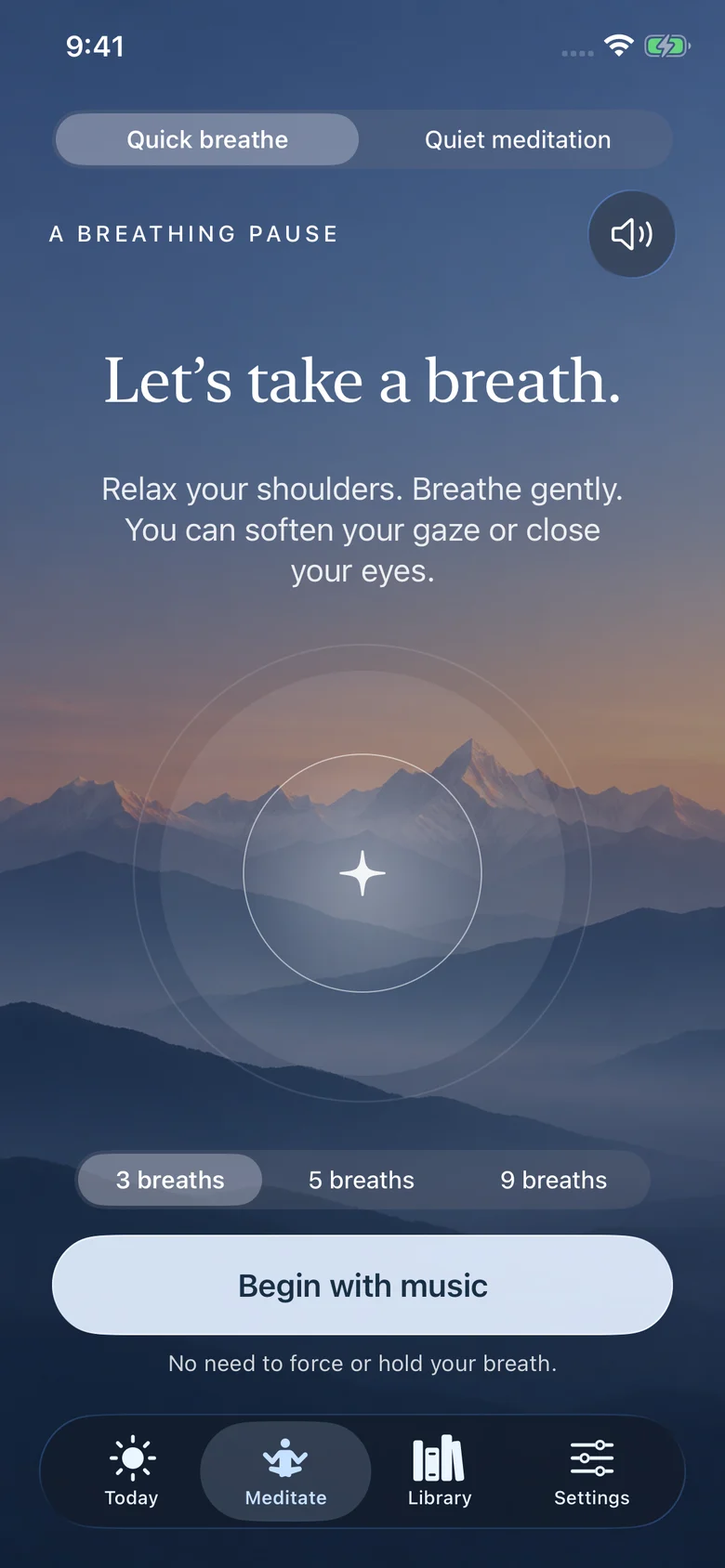
The app’s Quiet meditation timer can support this practice with your choice of session length, music or silence, and an optional ending bell. Let your attention settle at its own pace.
Paced breathing: follow a gentle cue
A paced exercise suggests a rhythm for breathing in and out. A visible cue can be helpful when counting in your head feels distracting.
Quick breathe in Bhagavad Gita English & Hindi guides a 4.5-second inhale followed by a 6-second exhale. There are no breath holds. Choose three, five or nine cycles, and let comfort take priority over matching the circle exactly.
Choose the method you can practice comfortably
Start with awareness if you prefer not to control your breathing. Try the visual cue if a rhythm helps you settle into the exercise. For either approach, sit somewhere safe and stop if you feel dizzy or distressed.
The best starting point is not the most complicated technique. It is one you understand well enough to practice without straining. For a walkthrough, try our beginner breathing guide.
Sources and further reading
Written by Ameya Labs. Research sources are linked above; practical app instructions are based on our meditation controls. Something unclear? Tell us.